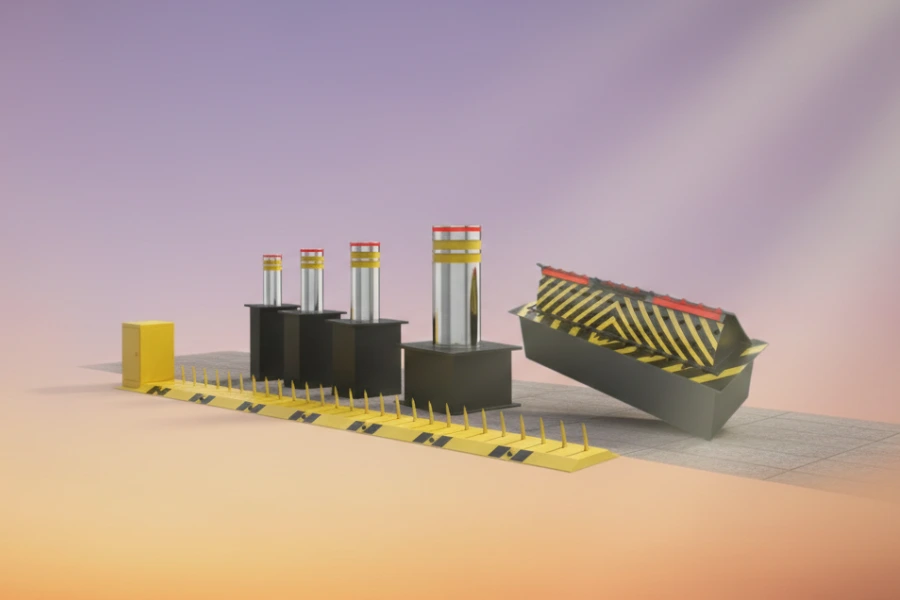
Road Blockers & Rising Bollards: The Complete Guide to High-Security Vehicle Access Control
Uncontrolled vehicle access is one of the biggest security risks for airports, government facilities, industrial plants, and commercial complexes. A single weak entry point can compromise an entire perimeter. That’s why modern infrastructure relies on road blockers, rising bollards, and tire killers—engineered systems designed to control traffic, prevent unauthorized entry, and protect critical assets. In this guide, we’ll break down how these systems work, where they’re used, and how to choose the right solution for your facility.What Are Road Blocker Traffic Control Systems?
Road blocker traffic control systems are physical vehicle barriers installed at entry and exit points to regulate or restrict access. Common systems include:- Road Blockers
- Rising / Automatic Bollards
- Tire Killers (Spike Barriers)
Road Blockers: Maximum Impact Protection
Road blockers are heavy-duty barriers capable of stopping high-speed, high-weight vehicles.Key Benefits:
- Designed for anti-ram protection
- Ideal for airports, defense zones, and government buildings
- Can be integrated with access control, RFID, ANPR, or security cabins
- Available in hydraulic or electro-mechanical systems
Rising Bollards: Security Without Visual Clutter
Rising bollards offer a perfect balance between security and aesthetics.Why Choose Rising Bollards?
- Retractable design keeps entrances visually clean
- Suitable for commercial buildings, IT parks, hotels, and city entrances
- Automatic operation ensures smooth traffic flow
- Can be synchronized with emergency access systems
Tire Killers: One-Way Vehicle Control
Tire killers (spike barriers) are designed to allow authorized exit while preventing unauthorized entry.Common Applications:
- Parking exits
- Toll booths
- Industrial facilities
- Secure campuses
Where These Systems Are Commonly Used
- Airports & baggage handling zones
- Government & defense facilities
- Industrial plants & warehouses
- Logistics hubs & ports
- Commercial complexes & data centers
How to Choose the Right Access Control System
Before installation, consider:- Threat level & vehicle impact requirements
- Traffic volume & entry frequency
- Automation & integration needs
- Space constraints
- Maintenance & lifecycle cost
Final Thoughts
Road blockers, rising bollards, and tire killers aren’t just barriers—they’re strategic security investments. When properly selected and installed, they:- Reduce security risks
- Improve traffic flow
- Protect people, property, and operations